Green claims: new EU rules approaching
Anne-Laure de Hults
Manager Strategy & Sustainability - UBA
From September 2026, environmental claims will be tightly regulated in the EU. The ECGT Directive sets strict standards to ensure transparency, credibility and consumer protection in sustainability communication.
A new legal framework for green communication
The Empowering Consumers for the Green Transition (ECGT) Directive will fully apply from 27 September 2026. Introduced in February 2024, it aims to combat greenwashing and set clear requirements for using environmental claims and sustainability labels in marketing.
To clarify grey areas, the European Commission released a Q&A document on 27 November 2025. It confirms that the rules will also apply to products already on the market at the time the Directive comes into effect.
What brands need to prepare for
✅ Brand and product names
Brand names that suggest environmental benefits may be treated as environmental claims. If the implied message isn’t clearly substantiated, the name may be considered a prohibited generic claim, unless the brand can demonstrate recognised excellent environmental performance. Existing trademarks are not automatically exempt.
✅ Visual cues may be considered claims
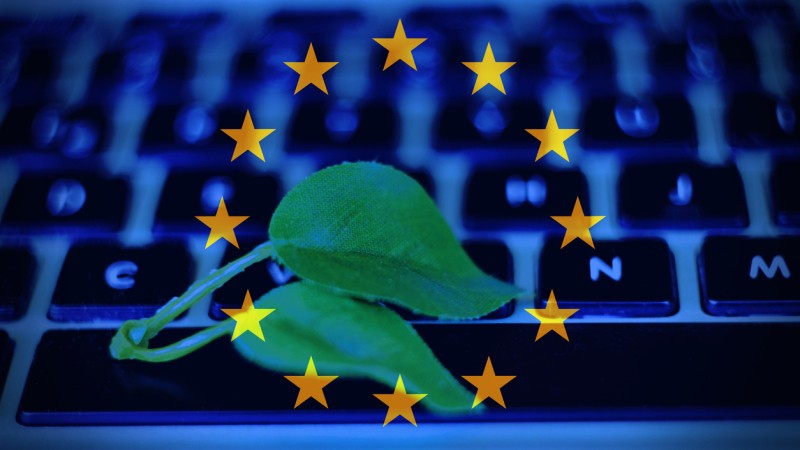
Imagery such as leaves, water drops or other natural symbols may be interpreted as implicit environmental claims when combined with words or logos. This impacts packaging design and advertising visuals.
✅ Carbon neutrality: stricter requirements
Claims like “carbon neutral,” “climate neutral,” or “carbon compensated” are prohibited unless they are backed by recognised top-level environmental performance. Offsetting through external projects (e.g. reforestation) is explicitly ruled out. Future commitments are allowed only if they come with a detailed and verifiable plan, including measurable goals and third-party audits.
✅ Sustainability labels and certification
Terms like “eco-friendly” or “environmentally friendly” are only allowed if the product is certified by the EU Ecolabel, a Type I ecolabel (e.g. Nordic Swan), or meets specific EU legislation. Voluntary sustainability labels must now be backed by third-party certification schemes that meet transparency and verification standards. Existing labels must be updated by 2026.
✅ Products already on the shelves must comply
From 27 September 2026, all environmental claims and labels on products, including those already sold, must comply with the new rules. The Commission suggests corrective solutions such as stickers or additional point-of-sale information for non-compliant items.
The transition period of 30 months, which began on 28 February 2024, ends on 26 September 2026. Member States must transpose the Directive by 26 February 2026.
What about the Green Claims Directive?
At the same time, another important piece of legislation, the Green Claims Directive, is currently stalled in the legislative process, as the co-legislators have not yet resumed discussions. It is expected to complement the regulatory framework by further clarifying the conditions under which environmental claims are considered valid.
Now is the time to act
Marketing teams should begin reviewing product names, visuals, environmental arguments and any sustainability labels. The ECGT Directive demands legal compliance, but it also offers an opportunity to strengthen brand credibility through responsible, evidence-based sustainability messaging.
Also interesting for you
-
New anti-greenwashing rules: is your sustainability communication ready for 27 September?
From 27 September 2026, the European Empowering Consumers for the Green Transition (ECGT) Di...UBA Focus News
-
Les Binet on the cost of small thinking
At UBA Media Date 2026, Professor Les Binet delivered a blunt warning: the industry’s ...UBA Focus News
-
AI in advertising: new guidelines for transparency and responsible use
To help the Belgian advertising ecosystem use AI responsibly, the Advertising Council and it...UBA Focus News