How to improve personalisation and targeting in a fragmented customer journey
During the UBA Exchange Community Data & Tech session, experts from iO, Google and Publicis Groupe showed that AI can make personalisation more effective when it helps connect data, content and intent to create more relevant and more coherent customer journeys.
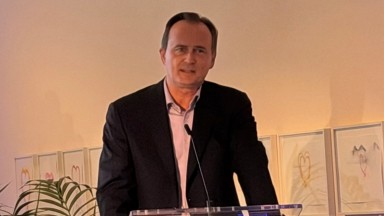
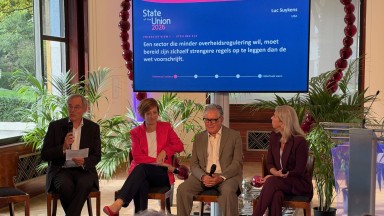
Steven Van Duyse, Strategy Director at iO, Chloë Apostolatos, Senior Account Executive at Google, Thomas Allemand, Connected Identity Director at Publicis Media, and Matthieu Vercruysse, Chief Transformation Officer at Publicis Groupe Belgium, explored how AI is accelerating hyperpersonalisation and audience targeting.
One-to-one communication starts in owned platforms and channels
True one-to-one personalisation is mainly achievable in environments where the brand can recognise the customer: CRM, e-mail, websites, applications and logged-in experiences. These owned platforms offer marketers the best opportunity to connect behaviour, preferences, timing and content to create a useful interaction.
For Steven Van Duyse, practical implementation is based on 5 key elements: a centralised web platform for all audiences, a unified data layer, intelligent scoring creating a living persona profile for each visitor, dynamic content personalised by personna, and a feedback loop where performance continuously refines scoring and content decisions.
Paid media can still benefit from AI and audience data, but large-scale hyperpersonalisation remains more limited by signal loss, consent fatigue and walled gardens. The practical priority is therefore to use one-to-one personalisation where it creates the most value, while making broader activation more relevant elsewhere.
Relevance and coherence require better user identification
The real challenge is to make the entire customer journey coherent. A person who visits a product page, clicks on a newsletter, compares options or buys in-store should not be treated as a different customer at every touchpoint.
This is where identity solutions, presented by Thomas Allemand and Matthieu Vercruysse, can play an important role. Connected Identity helps brands bring together fragmented signals from CRM, web behaviour, e-mail interactions, media exposure, transactional data and platforms. The aim is not to know everything about everyone. It is about recognising enough reliable signals to understand where a person is in their journey and which message is most relevant next.
Identity then becomes a common language between planning, creation, activation and measurement. It helps marketers move beyond static segments towards more dynamic audiences, based on behaviour, context and intent. In practice, this can improve frequency management, reduce repetition, adapt content and activate more coherent messages across paid, earned, shared and owned media.
Intent is now becoming the priority signal
Chloë Apostolatos presented how AI is changing the way people make purchasing decisions. Consumers are becoming more autonomous: they search, compare, ask for help, explore visually and expect suggestions that match their needs. AI can shorten the path between exploration and purchase, but it can also create richer journeys, with more questions and more moments of evaluation.
For brands, this means that targeting must go beyond keywords and static audience definitions. Intent signals become central: what people are trying to solve, compare, understand or buy at a specific moment. The best advertising becomes an answer, not just an impression.
To be ready, brands need solid first-party data, clear product feeds, useful website content, video, reviews and measurement capable of teaching AI what works. They also need inspiring creation that remains coherent with the brand while adapting to different needs and contexts.