Are brands winning attention but losing relationships?
Luc Eeckhout, Manager Media & Agencies
In today's marketing landscape, grabbing and keeping consumers' attention has become harder than ever. They are exposed to thousands of commercial messages every day. Algorithms optimise campaigns in real time, marketers track clicks and conversions with increasing precision, and media plans can be adjusted at the touch of a button. Yet despite all these technological advances, many brands face a growing challenge: they succeed in capturing attention for a moment, only to be forgotten shortly afterwards.
The rise of the "one-night-stand brand"
The phenomenon is increasingly visible across industries. Consumers notice a campaign, watch a video or click on an advertisement, but that does not necessarily mean they will remember the brand tomorrow, trust it next month or choose it next year.
Marketing effectiveness experts have warned for years that attention alone is not enough. Brands need to build memory structures, emotional connections and distinctive associations that remain long after a campaign has ended. However, in an environment dominated by performance metrics, marketers often find themselves rewarded for immediate results. Clicks, views and conversions are easy to measure. Brand preference, trust and long-term relevance are much harder to quantify.
As a result, many organisations are beginning to ask whether the industry has become too focused on short-term efficiency and not focused enough on sustainable brand growth.
Why video remains central to brand building
One medium continues to play a unique role in addressing this challenge: video. Unlike static formats, video combines sight, sound and motion to create emotional engagement. It allows brands to tell stories, build distinctive assets and create memorable experiences that consumers are more likely to remember.
Video's impact depends not only on the strength of the creative message, but also on the context in which it appears. As viewing habits continue to shift, factors such as attention quality, the viewing environment and audience engagement are becoming increasingly important.
The growing importance of Connected TV
This evolution has fuelled the rapid rise of Connected TV. As audiences increasingly consume content through streaming platforms and internet-connected television screens, advertisers are discovering new opportunities to combine the emotional impact of traditional television with the targeting and measurement capabilities of digital media.
Connected TV offers marketers access to premium viewing environments where audiences are often more attentive and engaged. For many advertisers, it represents an opportunity to move beyond fleeting interactions and create stronger, more meaningful consumer connections.
The growing importance of premium video contexts has also reignited discussions around the balance between brand building and performance marketing. Rather than viewing these disciplines as competing priorities, many industry leaders now see them as complementary drivers of long-term business growth.
Deborah Gurofsky to explore these questions at UBA Media Date 2026
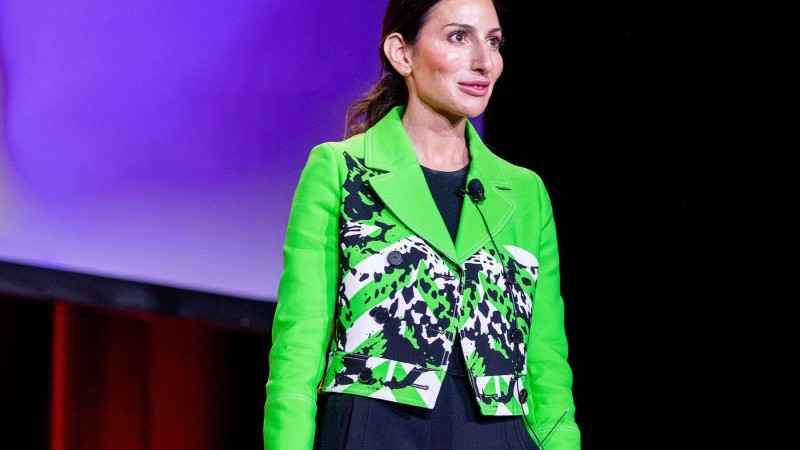
These themes will be explored by Deborah Gurofsky during UBA Media Date on 25 August 2026. As Senior Vice President and Managing Director of Media Pulse, Blue Ant Media's Connected TV marketplace (Canada), Gurofsky has become one of the industry's leading voices on premium video advertising, Connected TV and media effectiveness.
Her presentation, titled "Hooked, Then Ghosted: The Era of the One-Night-Stand Brand", promises to challenge conventional thinking about consumer attention and advertising effectiveness.
A conversation not to be missed
For marketers, media specialists and communication professionals, the discussion could hardly be more timely. As audiences fragment, streaming continues to grow and pressure on marketing performance intensifies, brands are searching for new ways to remain relevant while delivering measurable results. Understanding the role of premium video, storytelling and Connected TV in that equation will be essential for future success.
On 25 August 2026, UBA Media Date will be the opportunity to hear Deborah Gurofsky's perspective on these critical questions and explore what it takes for brands not only to capture attention, but to earn lasting consumer loyalty.
Attendees will also hear from Ruben Schreurs, who will share insights from the Paid Media Effectiveness Handbook by Ebiquity and the World Federation of Advertisers (WFA), and from Les Binet, who will explain how small thinking undermines effectiveness, and what marketers can do about it.
UBA Media Date will take place on Tuesday, 25 August 2026, from 2:00 p.m. at Dolce La Hulpe. Registration is now open.
Also interesting for you
-
UMA-UBA Benchmark: collaboration reshapes the media mix
The latest UMA-UBA Benchmark reveals a stabilisation of digital advertising in Belgium, alon...UBA Focus News
-
Media inflation cools in Belgium
Each year around this time, the World Federation of Advertisers (WFA) releases its biannual ...UBA Focus News
-
Why true cross-media measurement remains a challenge?
At the UBA Exchange Community session on Cross-Media Measurement and CIM ONE, Yannick Carrio...UBA Focus News